

Valencian dress
Gallery
A Valencian outfit is never improvised. It is inherited, cut in drops and taken back out into the street.
At Teixidets we sell cloth for that dress — waistcoat, jubon, justillo or a full outfit — from Aldaia, on the edge of Valencia. Choosing a pattern is not only choosing a colour: it is knowing which history it will wear.
The dress is not a costume
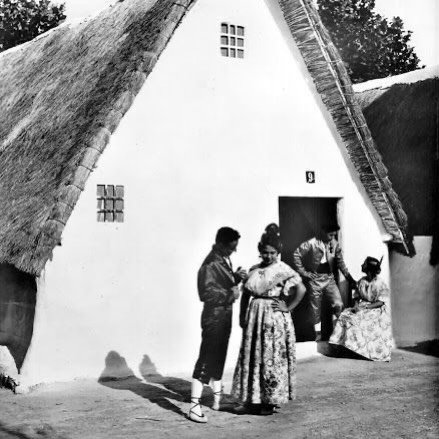
When a fallera dresses, or when the traje de valenciana comes out for a high day, nobody is putting on a costume. A story is being closed that starts in the orchard, passes through the loom and ends in the street: Fallas, a wedding, an offering, a Sunday that deserves brocade.
The silhouette we recognise today — a full saya, apron, fitted justillo, jubon, waistcoat, shoulder scarf — was not born on a magazine sketch. It was born from the llauradora's clothes: layers you could work in, wash, and, on a feast day, show. Over that architecture the twentieth century fixed the ceremonial fallera form: more weight in the pattern, the jewels and the peineta. Underneath, the same craft of cutting and building piece by piece remains.
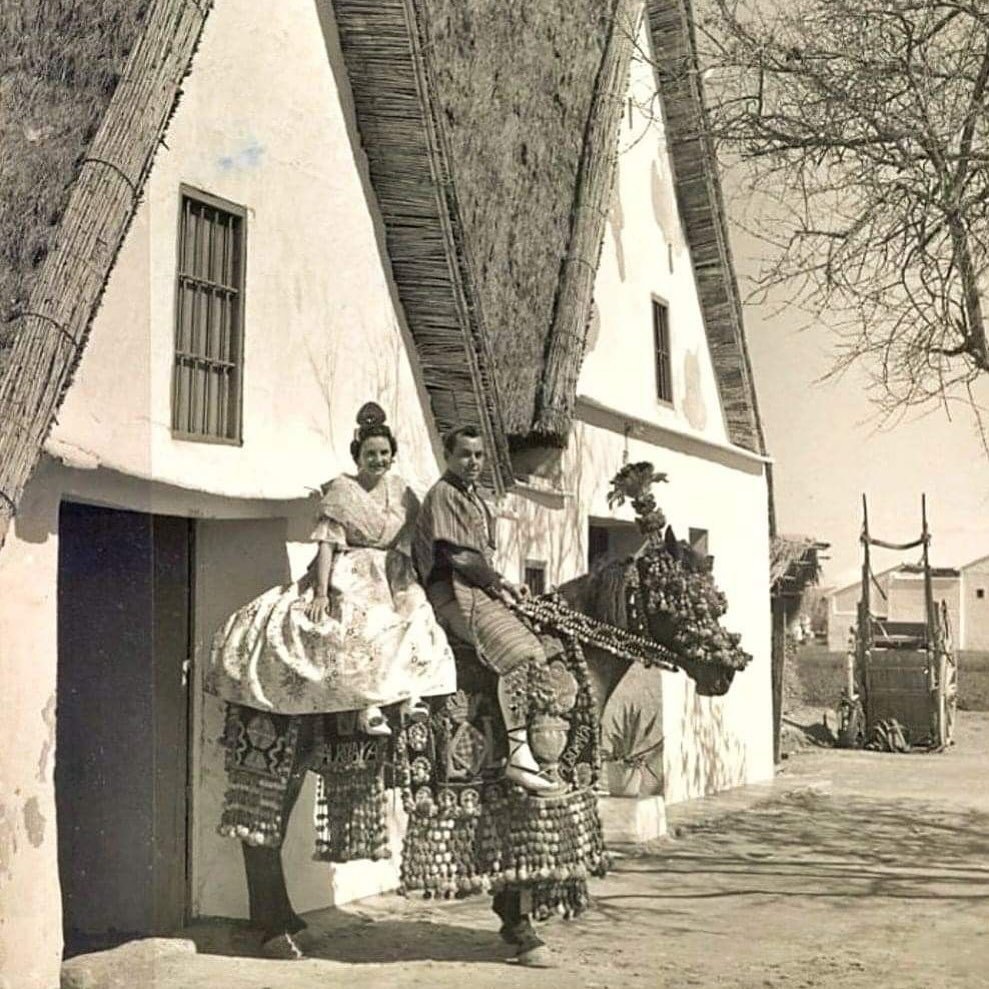
Before it was a feast, the dress was orchard and Sunday.
Valencia learned to speak in flowers
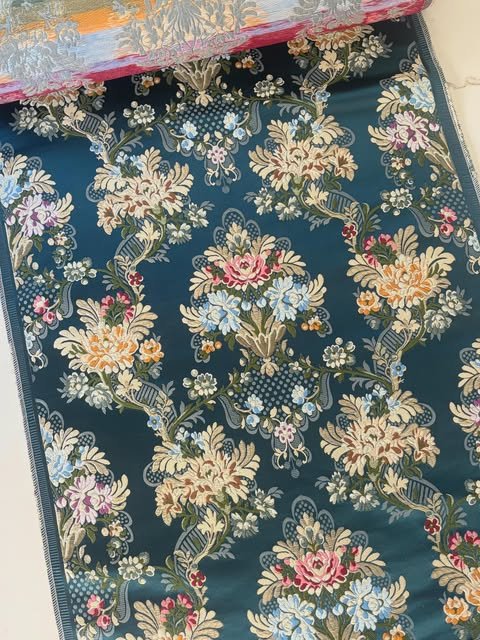
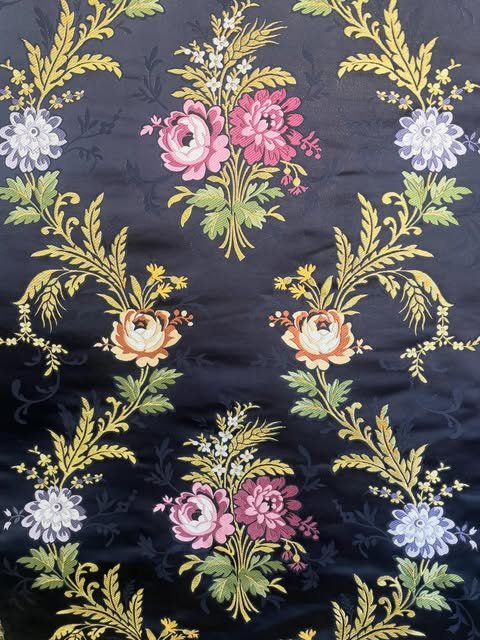
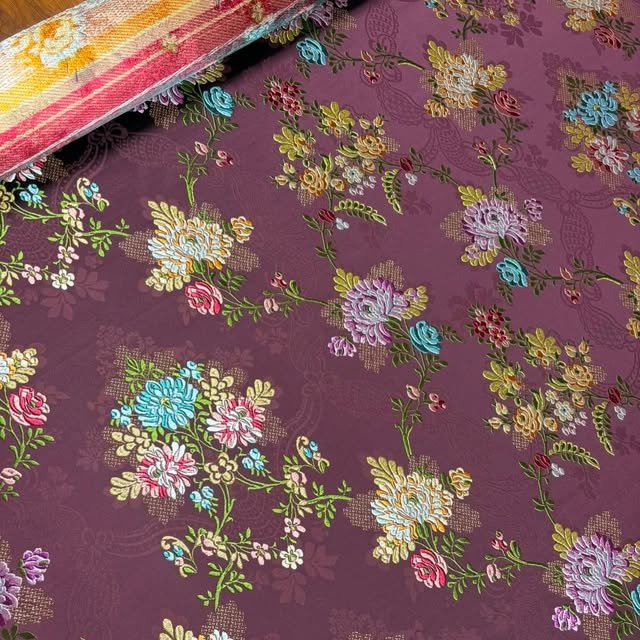
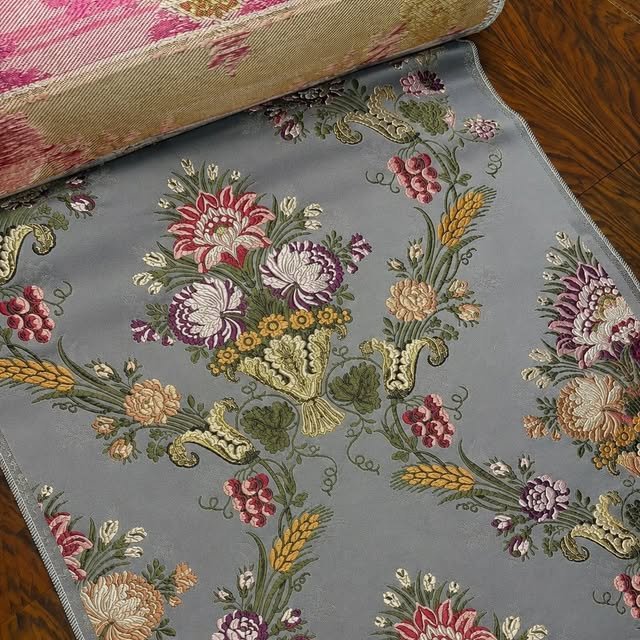
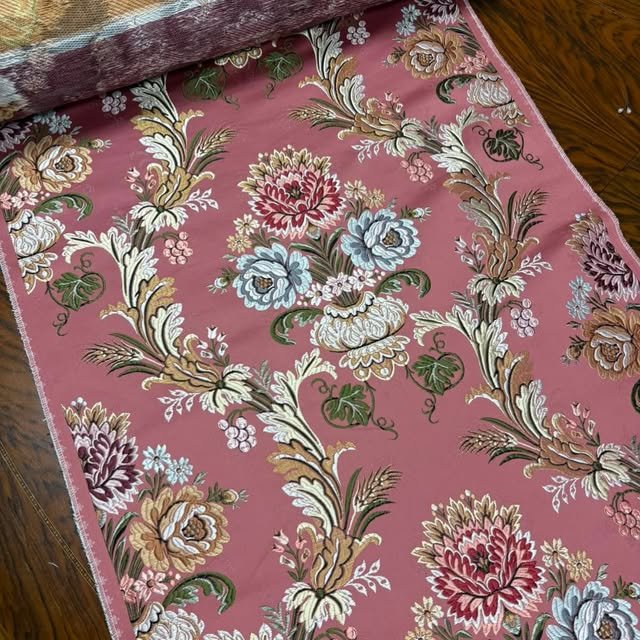
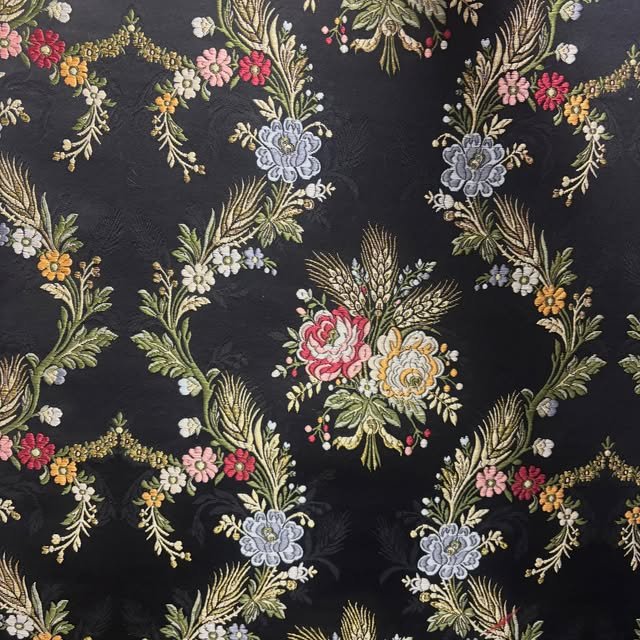
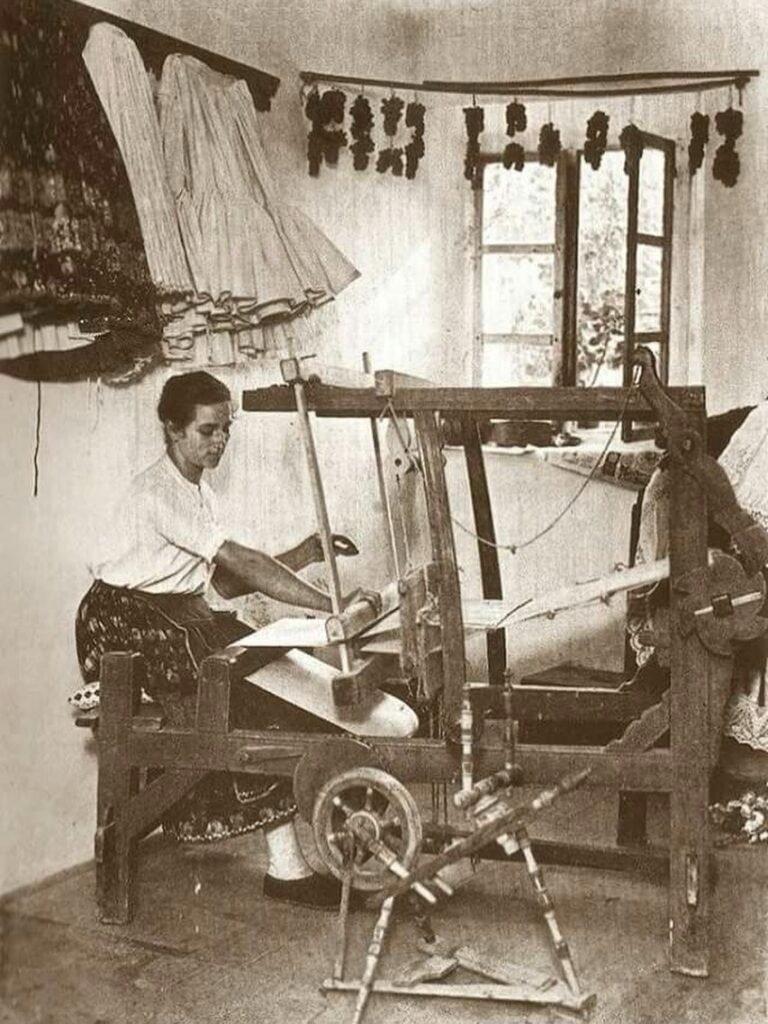
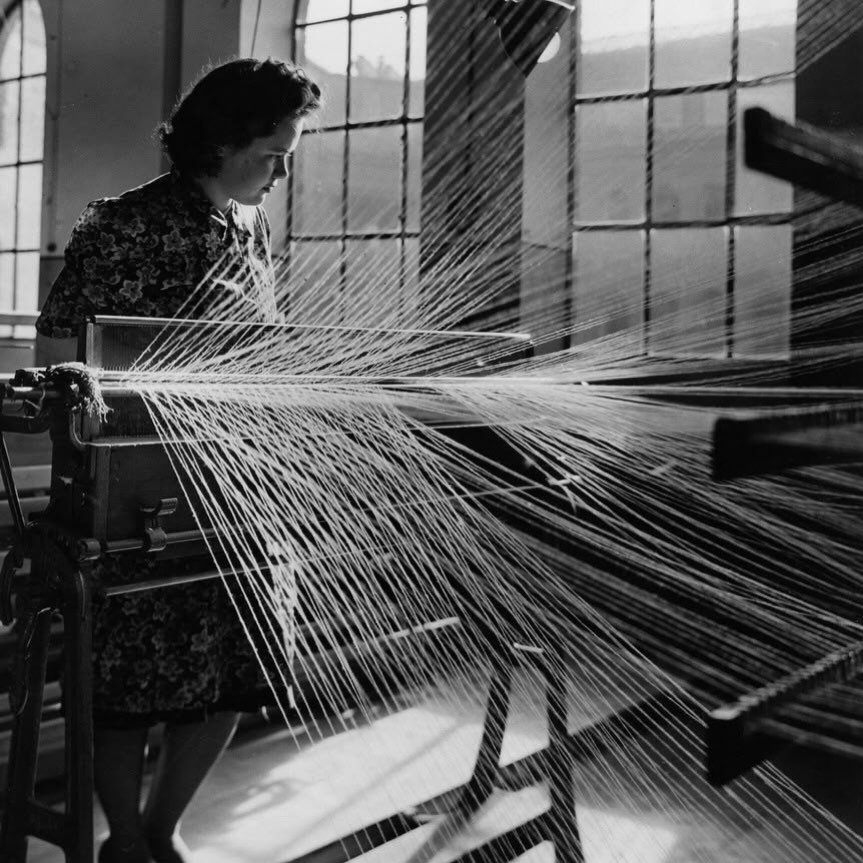
For centuries Valencia was a silk capital. Cloth was woven in the Velluters quarter; contracts were struck at the Silk Exchange; the College of High Silk Art kept the rules of the trade. From that loom comes the espolín: the pattern is not printed, it is woven, bouquet by bouquet, often with gold or silver thread.
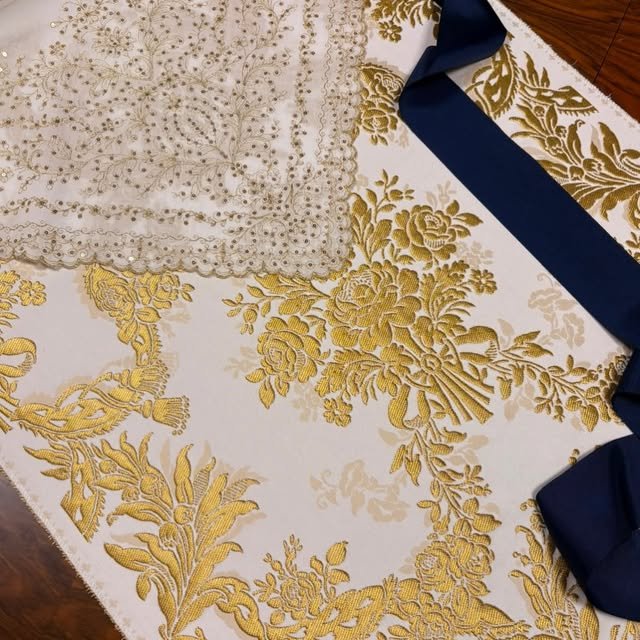
That is why Valencian dress does not wear flowers as decoration. It wears a vocabulary. Bouquets, garlands, ears of wheat: the same motifs that travelled in satins and brocades when this city dressed half of Europe. That floral language is still on the workshop rolls. It is not shop-window nostalgia. It is technical memory.
How a dressed body is built
Each garment asks for its own cloth. The justillo cinches the torso and gives it the line. The jubon covers and answers the saya. The waistcoat cuts the volume and shows the pattern up close. The apron splits the skirt. A full outfit is not “more metres”: it is an order. If the pattern does not fall well on a piece, a hem will not fix it: you choose another cloth.
On a traditional loom the cloth came off narrow. That is why the 0.64 m narrow widths are cut in drops and work well for a waistcoat, jubon or justillo; the 1.40 m double width gives more room when the piece is large. At Teixidets those are the published widths: the ones on each sheet, with the metreage, the colour and the loom — often Vives i Marí. The shop fabrics are rayon and cotton, as the sheets say. The memory of silk is in the pattern, not on a label we cannot claim.
It has to be seen on the roll
A pattern changes with the afternoon light and with the hand that holds the roll. You can buy from a photo. You understand it in the workshop. Come and see them and touch them at Av. Monestir de Poblet, 1 Bajo, Aldaia, or write to us on WhatsApp at +34 670 43 50 64.
The vocabulary of the patterns
Bouquets, garlands and wheat: the floral language silk left in Valencian dress.